- /
Frequently Snacking at Work? Understand the Risks and Choose Practical Snacks
Editor: Danastry Intan Permatasari
The habit of snacking while working can be triggered by hunger, stress, boredom, an afternoon energy slump, or easily accessible food. If done too often without paying attention to portions, snacks high in sugar and calories can add to your daily energy intake.
Office workers quite frequently consume snacks such as biscuits, chocolate, chips, and pastries during working hours. Some respondents admit to snacking to cope with stress or maintain their mood until the afternoon. Because this source is a media survey report, the results cannot be considered representative of all workers.
Why Do Office Workers Like to Snack?
1. A long gap between lunch and dinner
Hunger can return a few hours after lunch, especially if the lunch menu lacks protein or fiber.
2. Energy and focus drop in the afternoon
The drop in alertness in the mid-afternoon is known as the post-lunch dip. A review in Clinics in Sports Medicine explains that this condition is linked to biological rhythms and an increased tendency to feel sleepy. This phenomenon can occur even if a person does not eat lunch. pubmed.ncbi.nlm.nih.gov
3. Snacking as a response to stress
Work pressure and deadlines can lead someone to seek food as a break or a source of comfort. In this condition, a person may snack even when they are not truly hungry.
4. Influence of coworkers and the office environment
Cakes, biscuits, or snacks brought by coworkers can encourage spontaneous eating habits. Food that is always available on your desk is also easier to consume without paying attention to the amount.
5. The desire for quick energy
Sweet snacks can provide a brief feeling of energy. However, options that are simply high in sugar do not necessarily keep you full for longer.
Does Snacking at Work Always Cause Weight Gain?
Not always. The impact depends on:
- The type of snack.
- Portion size.
- Frequency of consumption.
- Physical activity.
- Total energy intake throughout the day.
The habit of snacking carries a higher risk of weight gain if snacks are consumed repeatedly, eaten directly from large packages, or always paired with sugary drinks.
How to Choose More Measured Snacks
When choosing office snacks, pay attention to:
- Serving size.
- Calorie count.
- Added sugar.
- Protein and fiber content.
- Saturated fat.
- Ingredient list and allergy information.
A study of 23 women found that snack bars higher in protein and fiber produced lower short-term glucose and insulin responses compared to snack bars high in fat and sugar. Consuming high-protein snack bars was also associated with approximately 5% lower energy intake at the next meal. pubmed.ncbi.nlm.nih.gov
These results do not mean all snack bars have the same effect. Products still need to be evaluated based on their labels and portion sizes.
YA’Bar Chocolate as a Practical Snack
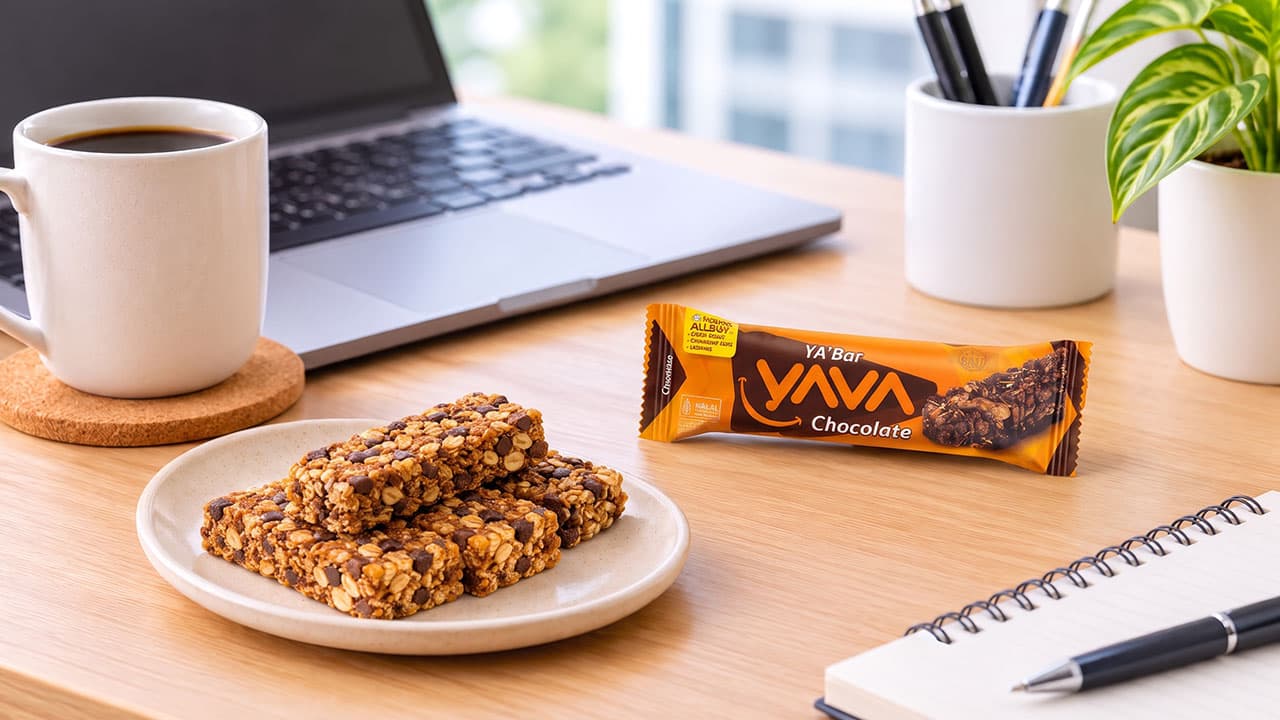
YA’Bar Chocolate can be a practical snack option to accompany your work activities. It is easy to carry and can be enjoyed:
- When hungry between lunch and dinner.
- When you need a snack between meetings.
- Before your commute home.
- When you want to enjoy a chocolate-flavored snack.
Consume according to the serving size on the packaging and keep YA’Bar as a complement, not a replacement for main meals. Check the nutritional information, ingredients, and allergy statements before consuming.
Find YA’Bar Chocolate at yavabali.com/id/products/yabar-chocolate.
Tips to Reduce Excessive Snacking at the Office
- Prepare snacks in single-serving portions.
- Avoid keeping large quantities of snacks on your desk.
- Drink water regularly.
- Make sure your lunch includes protein and vegetables.
- Stand up or take a short walk every few hours.
- Distinguish between physical hunger and the urge to eat out of stress or boredom.
- Do not eat directly from large packages.
- Keep track of the times when the urge to snack appears most often.
Conclusion
Office workers may snack more frequently due to hunger, afternoon energy slumps, stress, boredom, and workplace influences. Snacking does not need to be avoided entirely, but it is best done with measured portions and suitable choices.
YA’Bar Chocolate can be a practical snack to accompany your work, meetings, or commute through the afternoon. Find the product through the YA’Bar Chocolate product page.
Note: This article is for informational purposes only and is not a substitute for individual medical diagnosis or advice.
Referensi
- Monk TH. (2005). The post-lunch dip in performance. Clinics in Sports Medicine, 24(2), e15–e23. PMID: 15892914. pubmed.ncbi.nlm.nih.gov
- Williams G, Noakes M, Keogh J, Foster P, Clifton P. (2006). High protein high fibre snack bars reduce food intake and improve short term glucose and insulin profiles compared with high fat snack bars. Asia Pacific Journal of Clinical Nutrition, 15(4), 443–450. PMID: 17077058.pubmed.ncbi.nlm.nih.gov
- YAVA. YA’Bar Chocolate.