- /
How the Biological Clock Works and Its Impact on Health
Editor: Danastry Intan, Andrew Octovianus Wijaya
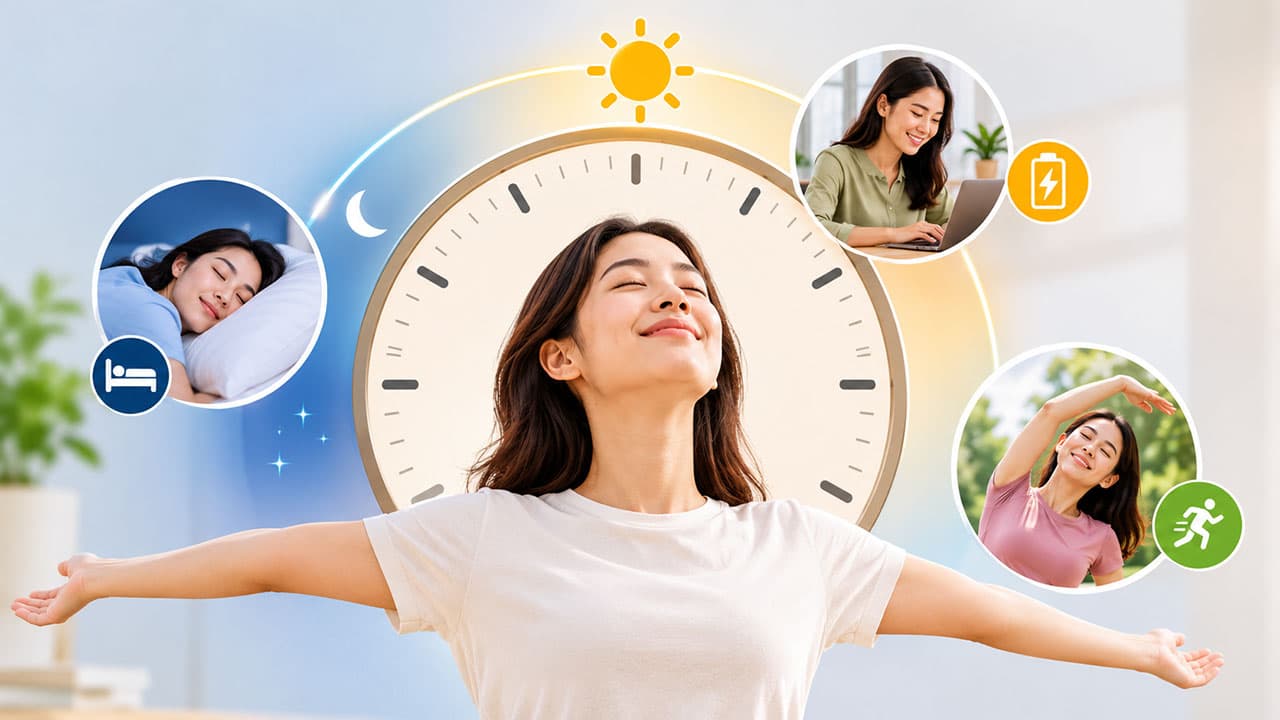
The circadian rhythm is the body's natural biological clock that operates on a roughly 24-hour cycle to regulate sleep schedules, body temperature, eating habits, hormone release, and metabolism. This master clock is controlled by a part of the brain called the suprachiasmatic nucleus (SCN), which is highly sensitive to light. Maintaining consistent sleep times, getting morning sunlight, and regulating eating patterns are key to keeping the circadian rhythm balanced. [1,2,3]
How Does the Body's Biological Clock Work?
Inside the part of the brain called the hypothalamus, there is a small control center called the suprachiasmatic nucleus (SCN) that acts like a "conductor" or master clock for all the body's organs. [1]
The SCN receives direct signals from the eyes regarding changes in light and dark in the surrounding environment. Based on these light signals, the body automatically adjusts various biological functions throughout the day. [3]
Main Functions of the Circadian Rhythm
1. Regulating the Sleep-Wake Cycle
As it gets dark at night, the brain increases the production of the hormone melatonin, which causes sleepiness. Conversely, exposure to natural light in the morning suppresses melatonin production so the body feels refreshed and alert. [1]
2. Regulating Core Body Temperature
Body temperature is not always the same throughout the day. Core temperature naturally drops when we are sound asleep and slowly rises again towards morning to prepare the body for activity. [4]
3. Supporting Metabolism and Digestion
The biological clock regulates when the digestive tract and metabolic hormones work most optimally to process food into energy. Irregular eating schedules can disrupt the regulation of hunger and daily energy stability. [1]
4. Maintaining the Immune System
When you sleep according to the body's natural rhythm, the immune system carries out the process of cell recovery and repairing tissues damaged throughout the day. [5]
5. Supporting Brain Function and Mood
A synchronized sleep-wake rhythm helps optimize memory, focus at work, decision-making abilities, and emotional stability. [2]
What Happens When the Circadian Rhythm is Disrupted?
The body's biological clock can get off track due to the following habits and environmental factors: [6]
- Staying up late or having a sleep schedule that changes daily.
- Working night shifts or suddenly changing shift schedules.
- Long-distance travel across time zones (jet lag).
- Exposure to light from phone, laptop, or TV screens too close to bedtime.
- Consuming caffeine in the afternoon or evening.
- Prolonged stress and irregular meal times.
When the circadian rhythm is disrupted, the body can experience the following impacts:
- Short-term effects such as difficulty sleeping (insomnia), severe daytime sleepiness, difficulty concentrating, persistent fatigue, and mood swings. [6]
- Long-term effects like chronic disruption of the biological clock, which is also associated with metabolic disorders and an increased risk of obesity, type 2 diabetes, and cardiovascular disease. [6]
Medical Note:
The relationship between circadian rhythm disruption and chronic disease is multifactorial (influenced by diet, physical activity, stress, and genetic factors). Experiencing temporary sleep disruption does not automatically mean a person will immediately suffer from a specific disease, but improving sleep patterns remains an important preventive step.
The Relationship Between the Circadian Rhythm and Afternoon Sleepiness (3 PM Slump)
Have you ever felt your energy and focus suddenly drop mid-afternoon? This phenomenon is medically known as the post-lunch dip or afternoon slump.
A scientific review in Clinics in Sports Medicine explains that decreased alertness in the afternoon is a natural part of human biological rhythms—this condition can even occur even if someone skips lunch. This condition will feel more severe if you lack sleep the night before or consume a lunch that is too high in sugar and simple carbohydrates. [7]
- Afternoon Practical Tips: If hunger strikes between main meals, choose snacks in measured portions (not as a replacement for a heavy meal). Check the nutritional information on the packaging to ensure adequate protein and fiber content and to limit added sugar.
8 Effective Ways to Keep Your Circadian Rhythm Balanced
You can train and maintain your body's biological clock by implementing the following daily routines:
- Be consistent with sleep and wake times: Try to go to bed and wake up at roughly the same time every day, including weekends.
- Get morning sunlight: Exposure to natural light in the morning helps "reset" the biological clock in your brain.
- Reduce screen exposure before bed: Turn off or put away phones, laptops, and televisions at least 30–60 minutes before bedtime.
- Limit caffeine in the afternoon: Avoid coffee, caffeinated tea, or energy drinks too close to your night's rest.
- Regulate meal times: Avoid heavy meals right before bedtime.
- Exercise regularly: Physical activity helps improve the quality of night sleep, but avoid high-intensity workouts right before bed.
- Create an ideal bedroom environment: Ensure your bedroom is dark, cool, and quiet.
- Set specific strategies for shift workers: Manage bright light exposure during work hours and use blackout curtains when you need to rest during the day.
When to Consult a Doctor?Health Warning Signs:
Immediately consult your condition with a doctor if you experience:
- Difficulty sleeping (insomnia) that persists continuously for several weeks.
- Extreme daytime sleepiness that interferes with driving safety or work.
- Severe fatigue that does not improve even with adequate sleep duration.
- Persistent concentration problems or mood swings.
- Recurring physical complaints after starting shift work or traveling across time zones.
Frequently Asked Questions (FAQ)
What is the circadian rhythm and where is its control center?
The circadian rhythm is the body's internal biological cycle that lasts for about 24 hours. Its control center is located in the hypothalamus part of the brain called the suprachiasmatic nucleus (SCN), which responds to light and darkness from the environment.
Why can we still get sleepy at 3 PM even without overeating at lunch?
Because naturally, the human biological clock experiences a slight decrease in alertness levels in the mid-afternoon (post-lunch dip). Factors like a lack of sleep at night and mild dehydration can worsen this sleepiness.
Can staying up late on weekdays be "paid off" by sleeping all day on weekends?
Sleeping too long on weekends can actually shift your biological clock schedule (social jet lag), making it even harder for the body to fall asleep on Sunday night and leaving you feeling sluggish on Monday morning. Consistency in wake times is much more effective.
Medical Note (Disclaimer): This article is prepared for health education purposes based on reliable scientific literature and is not a substitute for diagnosis, advice, or direct medical consultation with a doctor.
Reference:
- Das, J. M., & Launico, M. V. (2026). Neuroanatomy, nucleus suprachiasmatic. In StatPearls. StatPearls Publishing. https://www.ncbi.nlm.nih.gov/books/NBK546664/
- Reddy, S., & Sharma, S. (2026). Physiology, circadian rhythm. In StatPearls. StatPearls Publishing. https://www.ncbi.nlm.nih.gov/books/NBK519507/
- Slama H, Deliens G, Schmitz R, Peigneux P, Leproult R (2015). Afternoon Nap and Bright Light Exposure Improve Cognitive Flexibility Post Lunch. PLoS ONE 10(5): e0125359. https://doi.org/10.1371/journal.pone.0125359
- Refinetti, R. (2020). Circadian rhythmicity of body temperature and metabolism. Temperature, 7(4), 321–362. https://doi.org/10.1080/23328940.2020.1743605
- Ding, J., Chen, P., & Qi, C. (2024). Circadian rhythm regulation in the immune system. Immunology, 171(4), 525–533. https://doi.org/10.1111/imm.13747
- Brainard J, Gobel M, Scott B, Koeppen M, Eckle T. (2015). Health implications of disrupted circadian rhythms and the potential for daylight as therapy. Anesthesiology, 122(5), 1170–1175. https://doi.org/10.1097/ALN.0000000000000596
- Monk TH. (2005). The post-lunch dip in performance. Clinics in Sports Medicine, 24(2), e15–e23. PMID: 15892914. https://doi.org/10.1016/j.csm.2004.12.002