- /
Why Do Office Workers Like Snacking at 3 PM?
Editor : Danastry Intan Permatasari
The desire to snack around 3:00 PM can be influenced by a natural decline in alertness, hunger after a few hours of working, stress, and social habits at the office. Snacking is not always a problem, but snack choices and portions need to be monitored so they do not turn into an excessive intake of sugar and calories.
This phenomenon is often called the afternoon slump or post-lunch dip. A review in Clinics in Sports Medicine explains that the decline in mid-afternoon performance can be related to an increased drive for sleep and the body's biological rhythms. This condition can occur even when someone skips lunch, meaning afternoon sleepiness is not solely caused by the digestion process. pubmed.ncbi.nlm.nih.gov
Causes of Frequent Snacking Cravings at 3 PM
1. Decrease in energy and concentration
After working since the morning, the body and brain begin to experience fatigue. For some people, alertness naturally decreases in the mid-afternoon due to circadian rhythms.
As a result, a person may feel:
- Sleepy.
- Difficulty concentrating.
- Slower in completing tasks.
- The urge to rest or look for a snack.
2. Unfilling breakfast or lunch
If breakfast and lunch are low in protein or fiber, hunger can set in faster. Meals that are only high in simple carbohydrates can also make someone crave sugary foods more easily.
Protein helps support a feeling of fullness, while fiber can help slow down the digestion process.
3. The desire for quick energy
When feeling tired, the body often seeks easily consumable energy sources, such as cakes, sweet biscuits, candies, or sugary drinks. These foods can provide a quick energy boost but do not necessarily keep you full for long.
Therefore, snacks containing a combination of protein, fiber, and unsaturated fats can be a more balanced choice.
4. Stress and monotonous work
Work pressure, deadlines, and boredom can trigger the urge to snack even if the body doesn't really need a lot of energy. In this situation, eating can be a quick way to find comfort or take a break from work.
Try to distinguish between physical hunger and the desire to eat due to stress. If you've just eaten but still want to snack, take a short break, drink some water, or go for a brief walk before reaching for food.
5. The office environment's influence
Snacks available on your desk or brought in by coworkers can encourage spontaneous eating. Social factors like this often cause a person to consume snacks without planning the portion size.
Providing snacks in single-serving portions can help reduce the habit of eating straight from a large package.
Is it Okay to Snack at 3 PM?
Yes, especially if the gap between lunch and dinner is quite long or if you need fuel before your next activity. What needs to be considered is:
- The type of snack.
- Portion size.
- Added sugar content.
- Protein and fiber content.
- Total food intake throughout the day.
Snacking does not automatically cause weight gain. The risk usually increases when snacks are consumed repeatedly, portions are unmeasured, and they are accompanied by sugary drinks.
Light Snack Options for Office Workers
Snack bars can be a practical option because they are easily stored at your desk and require no long preparation. Choose them based on the nutritional information on the packaging.
A few things to check:
- Protein content.
- Dietary fiber.
- Total and added sugars.
- Calories per serving.
- Portion size.
- Allergen information.
A study involving 23 women compared high-protein, high-fiber snack bars with high-fat, high-sugar snack bars. The high-protein, high-fiber snack bars resulted in a lower glucose and insulin response. Consuming them in the morning was also associated with a roughly 5% lower energy intake during the subsequent lunch. pubmed.ncbi.nlm.nih.gov
These results indicate that the composition of a snack can affect short-term satiety. However, the study does not prove that all snack bars can cause weight loss or replace main meals.
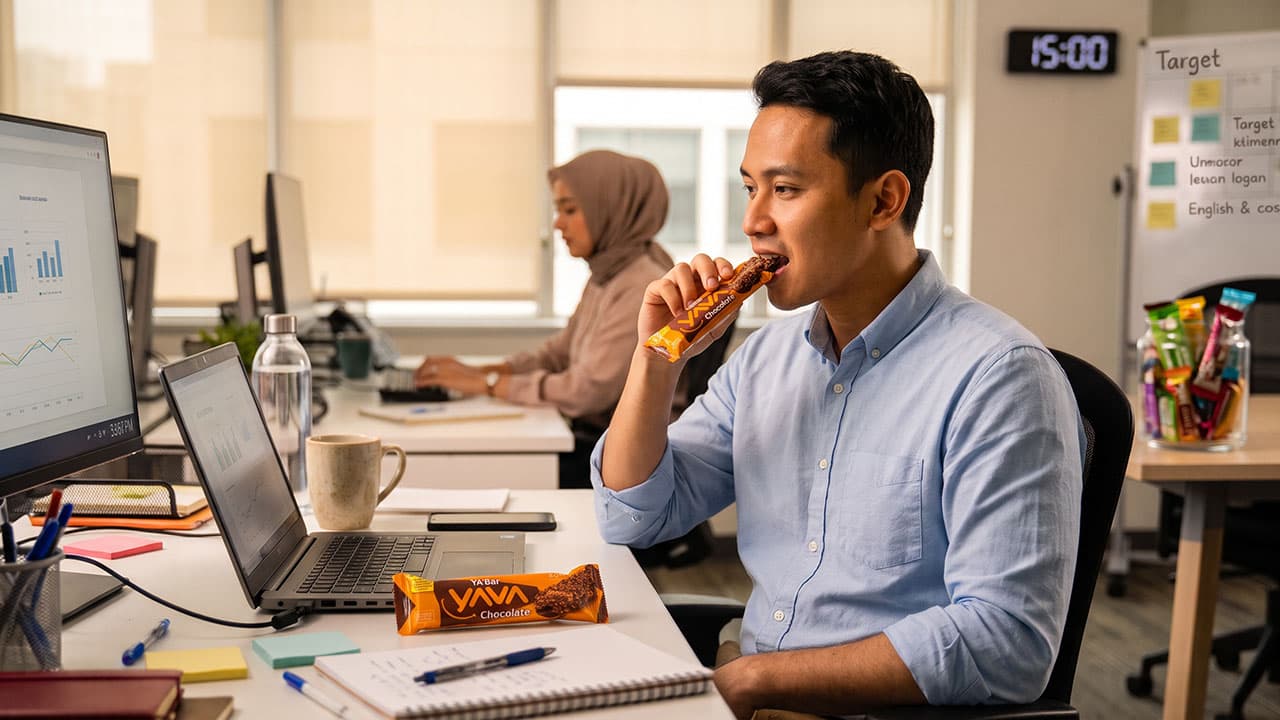
YAVA Snack Bars as Your Afternoon Work Companion
For a convenient snack between work tasks, you can consider YA’Bar YAVA options, which are available in several variants, such as:
- YA’Bar Chocolate
- YA’Bar Peanut Caramel
- YA’Bar Very Berry
YA’Bars can be brought to the office, stored in your bag, and enjoyed when you start feeling hungry in the afternoon. Always pay attention to the serving size, composition, sugar content, protein, and allergen information on the packaging.
Check out the selection of YAVA snack bars in the YAVA Bars category.
Tips for Better Snacking Habits at the Office
- Schedule snacks only if genuinely needed.
- Choose single-serving portions.
- Drink water before deciding to grab more snacks.
- Avoid using coffee as a meal replacement.
- Pair snacks with fruit or plain yogurt if you need to stay full for longer.
- Do not eat straight from a large package.
- Take a short break to walk around or stretch.
- Ensure your breakfast and lunch still contain protein and fiber sources.
When Should You Pay Attention to Afternoon Hunger?
Consult a healthcare professional if your hunger is accompanied by:
- Trembling/shaking or cold sweats.
- Dizziness or confusion.
- Extreme thirst and frequent urination.
- Persistent, severe fatigue.
- Unexplained weight changes.
These symptoms cannot be diagnosed solely from hunger and may require further medical examination.
Conclusion
The habit of snacking at 3 PM can be related to the post-lunch dip, a lack of protein and fiber intake, stress, sleep deprivation, and the office environment. Snacking can still be part of a balanced diet if the portions are measured and the food choices meet your bodily needs.
For light snack options that are convenient to bring to the office, discover YA’Bar Chocolate, Peanut Caramel, and Very Berry in the YAVA Bars category.
Note: This article is for informational purposes only and is not a substitute for individual medical diagnosis or advice.
Journal Reference
- Monk TH. (2005). The post-lunch dip in performance. Clinics in Sports Medicine, 24(2), e15–e23. PMID: 15892914. pubmed.ncbi.nlm.nih.gov
- Williams G, Noakes M, Keogh J, Foster P, Clifton P. (2006). High protein high fibre snack bars reduce food intake and improve short term glucose and insulin profiles compared with high fat snack bars. Asia Pacific Journal of Clinical Nutrition, 15(4), 443–450. PMID: 17077058. pubmed.ncbi.nlm.nih.gov