- /
Complete Guide to Daily Nutrition for Toddlers for Optimal Growth and Development
Editor: Danastry Intan, Andrew Octovianus Wijaya
Key Summary:
Fulfilling the daily nutritional needs of toddlers (ages 1 to under 5 years) focuses on a balanced variety of foods, high-quality animal proteins, a regular feeding schedule, and the practice of responsive feeding. Parents can use the Recommended Dietary Allowance (AKG) as a general reference, while always paying attention to food texture safety to prevent the risk of choking.
How to Manage a Toddler’s Daily Feeding Schedule and Eating Patterns?
Establishing a mealtime routine helps children naturally recognize hunger and fullness cues:
- Regular Schedule: According to the Indonesian Pediatric Society (IDAI) guidelines, provide 3 main meals and 1–2 snacks daily. Avoid excessive snacking close to main mealtimes. [2]
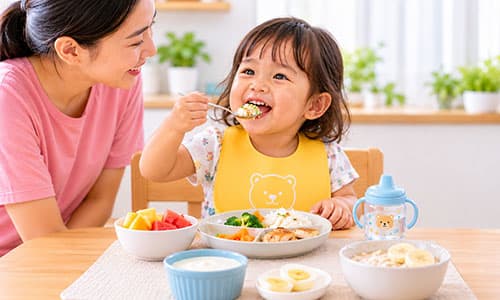
- Responsive Feeding: Respond to a toddler’s hunger and fullness cues with empathy. Parents are responsible for providing healthy food in a pleasant environment, while the child decides how much food they want to eat. [2,3,4]
- Avoid Force-Feeding: Start with small portions, then offer more if the child is still hungry. Never aggressively force a toddler to finish their portion. [3,4]
What Are a Toddler's Daily Nutritional Needs Based on the Indonesian RDA (AKG)?
Based on Minister of Health Regulation (Permenkes) No. 28 of 2019, the following is the daily nutritional adequacy reference for toddlers. These figures represent the estimated total daily intake from food and beverages, not the amount of side dishes that must be finished in a single meal. [1]

Vitamins and minerals to pay attention to
In addition to energy and protein, toddlers need vitamins and minerals for the formation of blood, bones, and body tissues. A varied selection of foods helps meet these needs. Below are several reference values for children aged 1–3 years. [1] Source of figures: Minister of Health Regulation No. 28 of 2019. RE stands for retinol equivalents for vitamin A. The nutritional content of each food is influenced by type, portion, and preparation. Vitamin D is only naturally present in certain foods; check fortification labels on packaging. [1,9]

*Data source: Permenkes No. 28 of 2019. RE = Retinol Equivalent. Nutrient content varies by food type, portion, and cooking method. Vitamin D occurs naturally in limited foods; check labels for fortification. [1,9]
Why Is Animal Protein So Important for Toddlers?
IDAI emphasizes that animal proteins (such as eggs, fish, beef, and chicken) contain complete essential amino acids needed for brain growth and development, as well as preventing stunting. [8]
Additionally, red meat and fish are rich in heme iron, which is much more easily absorbed by a child's intestines compared to non-heme iron from plants. Nevertheless, daily menus still need to be supplemented with carbohydrates (rice/potatoes), vegetables, fruits, and plant-based proteins (tofu/tempeh). [8]
Nutritious Snack Options and Food Texture Safety
SAFETY WARNING (Choking Hazard):
- According to the American Academy of Pediatrics (AAP) and the CDC, whole nuts, hard candies, popcorn, dense/hard granola, and thick coin-shaped slices of sausage are leading causes of choking in children under 4 years old.
- Always cut round fruits (such as grapes and cherry tomatoes) lengthwise into 4 small pieces.
- Supervise children while eating in an upright sitting position. Do not allow them to eat while walking, running, or playing. Supervision is still necessary even when food has been cut into small pieces. [5,6]
1. Are Cashews Safe for Toddlers to Consume?
- Whole Form: Prohibited for children under 4 years old due to choking hazards.
- Safe Processed Forms: Serve in the form of very smooth cashew butter (spread thinly on bread or thinned into warm porridge) or cashews finely ground into flour and mixed evenly into food. [5,6]
2. Is Granola Suitable for Toddlers?
- Raw/hard granola poses a high choking risk for toddlers.
- If you wish to serve it, ensure the granola is steeped or cooked with warm milk/water until it is completely soft like oatmeal, and free from whole nuts or chewy dried fruits. [5,6]
3. Other Safe Snack Examples:
- Plain pasteurized yogurt paired with soft fruits (such as mashed banana or avocado).
- Fully cooked boiled eggs cut into small pieces suitable for a child's grasp. [6,7]
4. Foods to Avoid or Limit:
- Foods that are too hard or dense, or cut into overly large pieces.
- Foods that are too salty, sugary drinks, or food products with added sugar.
- Unpasteurized milk and dairy products, as well as raw or undercooked animal-based foods.
Sample Daily Meal Plan
The following example helps organize menu variety and mealtimes, and is not a calculated menu that fulfills the entire RDA. Adjust portions, textures, and ingredient choices according to your child's age, allergies, and eating abilities.
| Meal Time | Sample Menu |
| Breakfast | Soft rice, fully cooked egg, and soft-cooked vegetables |
| Morning Snack | Plain pasteurized yogurt with mashed or finely cut ripe papaya |
| Lunch | Rice, deboned cooked fish, tofu, and vegetables |
| Afternoon Snack | Warm oatmeal with mashed banana; smooth diluted cashew butter may be added if tolerated |
| Dinner | Rice or mashed potatoes, fully cooked chicken, and soft vegetables |
Offer plain water regularly. Breastfeeding can be continued as needed; milk and dairy products can also be part of the menu according to age, but do not replace food diversity. Monitor growth through regular weighing and measuring at an integrated health post (posyandu) or healthcare facility.
Frequently Asked Questions
Should a toddler always finish the food on their plate?
There is no need to force them. Give a small initial portion. If the child shows signs of fullness (such as turning their face away or closing their mouth), stop the feeding process empathetically. [2,3]
Does 20 grams of protein mean 20 grams of meat?
No. The 20-gram figure indicates the total protein nutrient accumulated from all foods consumed in a day (a combination of eggs, milk, fish, rice, and tofu).
Is it okay to give cashews every day?
Yes, provided they are served as thinned smooth butter or nut flour, the child has no history of allergies, and the portion is adjusted to daily energy needs. Do not give whole nuts or rely on them as the sole source of protein. [5,6]
Is soaked granola definitely safe?
Not always. Nut pieces or hard ingredients may remain difficult to chew even after soaking. Check the entire texture; if it cannot be softened evenly, choose another more suitable food. [6]
When should I consult a professional about my child's eating habits?
Consult a professional if your child consistently has difficulty eating, frequently coughs or chokes while eating, is not gaining weight, or has a very limited range of accepted foods. A doctor or nutritionist can assess their needs and underlying causes, rather than simply adding snacks or supplements.
*Disclaimer: The information in this article is intended solely for evidence-based health education and does not replace medical advice, diagnosis, or treatment from a pediatrician or professional nutritionist.
Article Reference
[1] Kementerian Kesehatan RI. Permenkes Nomor 28 Tahun 2019. Lampiran I, tabel energi, vitamin, dan mineral.
[2] IDAI. Pentingnya Mengatur Jadwal Makan Anak.
[3] IDAI. Sulit Makan pada Bayi dan Anak.
[4] WHO. Guideline for complementary feeding of infants and young children 6–23 months of age (2023).
[5] American Academy of Pediatrics. Choking Prevention for Babies & Children. HealthyChildren.org.
[6] CDC. Choking Hazards. Infant and Toddler Nutrition.
[7] CDC. Foods and Drinks to Avoid or Limit.
[8] IDAI. Bukan Sekadar Kenyang — Pentingnya Protein Hewani dalam MPASI untuk Cegah Stunting.
[9] NIH Office of Dietary Supplements. Vitamin D — Health Professional Fact Sheet.
[10] EFSA. Dietary Reference Values for nutrients — Summary report. Penjelasan air total dari makanan dan minuman.