- /
Essential Nutrients for Pregnant Women and Daily Food Choices
Editor: Danastry Intan, Andrew Octovianus Wijaya
Key Summary
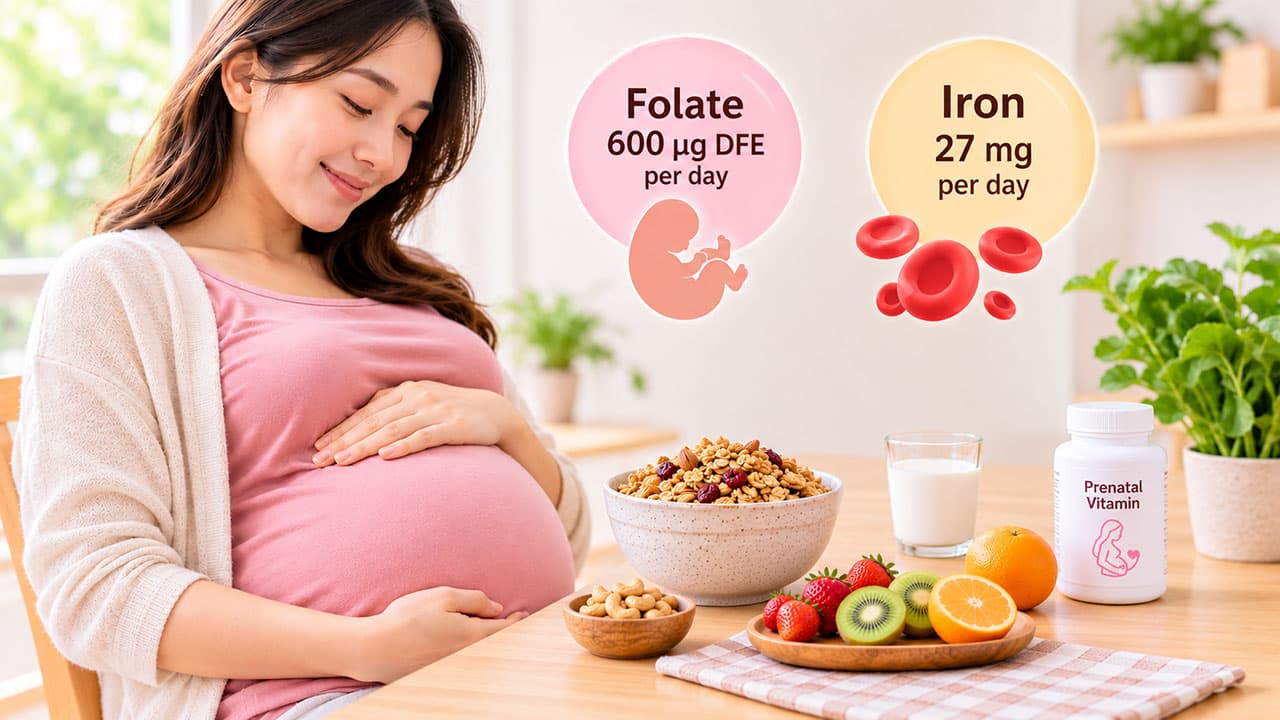
During pregnancy, the requirements for folate (600 µg DFE/day) and iron (27 mg/day) increase drastically to support fetal growth and prevent anemia. Meeting these nutritional needs requires a balanced combination of whole nutrient-dense foods (such as cashews, whole oat granola, and fresh fruit) and prenatal supplements as recommended by a doctor or midwife.
Why Is Folate Crucial Even Before Pregnancy?
Folate (Vitamin B9) plays a vital role in DNA synthesis and cell division. This nutrient is urgently needed in early pregnancy when the neural tube—which becomes the precursor to the fetal brain and spinal cord—begins to develop. [2,4]
- Daily Requirement: Based on National Institutes of Health (NIH) guidelines, pregnant women require 600 µg DFE/day. Dietary Folate Equivalents (DFE) measure the absorption of natural folate from food and folic acid from supplements or fortified foods. [2]
- Food Sources: Found in green leafy vegetables, legumes, bananas, papayas, and fortified foods. [2]
- Clinical Evidence: A Cochrane systematic review (De-Regil et al., 2015) demonstrates that folic acid supplementation from pre-conception through early pregnancy significantly reduces the risk of neural tube defects. [4]
Medical Note:
The birth defect prevention benefits are scientifically proven to stem from folic acid supplementation; therefore, this requirement cannot be replaced solely by consuming ingredients like cashews or granola.
What Are the Primary Benefits of Iron for Pregnant Women?
Iron is the primary component of hemoglobin, the red blood cell protein responsible for transporting oxygen throughout the mother's body and to the placenta and fetus. [3,5]
- Daily Requirement: The NIH recommends an iron intake of 27 mg per day during pregnancy. [3]
- Anemia Prevention: A Cochrane study (Finkelstein et al., 2024) involving 48,971 pregnant women shows that daily iron supplementation effectively lowers the risk of iron deficiency anemia at the end of pregnancy. [5]
The Role of Cashews, Granola, and Fresh Fruit in the Daily Menu
Whole nutrient-dense foods serve to supplement the daily energy and mineral needs of pregnant women:
1. Cashews (Natural Protein & Minerals)
Cashews contribute plant-based protein, iron, and magnesium, which help maintain muscle and nerve function. [1,3,6]
Consumption Tip: Choose roasted cashews without excessive salt or sugar, and ensure the mother has no history of nut allergies.
2. Whole Oat Granola (Carbohydrates & Fiber)
Granola made from whole rolled oats provides complex carbohydrates and natural fiber to maintain smooth digestion and deliver sustained energy. [8]
Consumption Tip: Check packaging labels for serving sizes, added sugar content, and iron or folate fortification details.
3. Tropical Fruits (Vitamin C & Absorption Booster)
Fresh fruits not only supply vitamins and minerals but also aid in the absorption of non-heme iron (iron from plant sources). [2,3,7]
| Food Type & Serving Size | Estimated Primary Nutrient Content | Physiological Benefit |
| Oil-Roasted Cashews (28 g) | Iron: 2 mg | Supports daily hemoglobin supply |
| Dry-Roasted Cashews (28 g) | Magnesium: 74 mg | Maintains muscle and nerve function |
| Whole Oat Granola | Complex Carbohydrates & Fiber | Provides steady energy & prevents constipation |
| Fresh Orange (1 medium) | Vitamin C: 70 mg | Optimizes non-heme iron absorption |
| Fresh Kiwi (1 medium) | Vitamin C: 64 mg | Supports immune system health |
| Sliced Strawberries (1/2 cup) | Vitamin C: 49 mg | Provides antioxidants & Vitamin C |
| Fresh Banana (1 medium) | Folate: 24 µg DFE; Magnesium: 32 mg | Supports electrolyte & natural folate needs |
| Diced Ripe Papaya (1/2 cup) | Folate: 24 µg DFE | Provides natural folate for cell metabolism |
*Source: NIH / USDA Food Composition Databases. Figures are estimates and vary based on processing and product brand. [2,3,6,7]
Daily Nutritional Meal Planning Guide
- Practical Breakfast: Combine whole oat granola with unsweetened pasteurized yogurt and thoroughly washed fresh fruit slices (such as strawberries or kiwi). [1,8,9]
- Healthy Snack: Use roasted cashews in measured portions as an energy-boosting snack between activities. [8,9]
- Main Meals: Consistently include primary proteins (fully cooked meat, fully cooked eggs, tofu, or tempeh), leafy green vegetables, and calcium sources. Consume Vitamin C-rich fruits alongside main meals to enhance non-heme iron absorption. [1,3,9]
Can Food Replace Prenatal Supplements?
No. A balanced nutritional diet and prenatal supplements complement each other rather than replace one another.
The World Health Organization (WHO) recommends daily supplementation of 30–60 mg elemental iron and 400 µg folic acid during pregnancy. These medical supplementation guidelines aim to prevent anemia and birth defects that are difficult to prevent through a daily diet alone. [2,3,10]
Frequently Asked Questions (FAQ)
Are cashews safe for pregnant women to consume?
Safe, provided there is no history of nut allergies. Choose variants roasted without excess salt or sugar, and adjust portions according to daily caloric needs. [1,10]
Is granola good for a pregnant woman's diet?
Yes, granola made from whole oats (rolled oats) contributes complex carbohydrates and natural fiber. Always check the nutrition facts label to choose products low in added sugar. [8]
Which fruits are most effective at aiding iron absorption?
Fruits rich in Vitamin C such as oranges, kiwis, strawberries, and guavas are highly effective at facilitating the absorption of non-heme iron from plant sources. [3,7]
Can folate requirements be met through food alone?
Although consuming folate-rich foods is strongly encouraged, it does not replace the role of prenatal folic acid supplements recommended by a doctor or midwife prior to conception onward. [2,4,10]
*Disclaimer: The information in this article is intended strictly for health education based on reliable scientific literature and does not replace medical advice, diagnosis, or treatment from professional doctors or midwives.
Reference
[1] MedlinePlus. Pregnancy and Nutrition.
[2] NIH Office of Dietary Supplements. Folate — Health Professional Fact Sheet.
[3] NIH Office of Dietary Supplements. Iron — Health Professional Fact Sheet.
[4] De-Regil LM, dkk. (2015). Effects and safety of periconceptional oral folate supplementation for preventing birth defects. Cochrane. DOI 10.1002/14651858.CD007950.pub3.
[5] Finkelstein JL, dkk. (2024). Daily oral iron supplementation during pregnancy. Cochrane. DOI 10.1002/14651858.CD004736.pub6.
[6] NIH Office of Dietary Supplements. Magnesium — Health Professional Fact Sheet.
[7] NIH Office of Dietary Supplements. Vitamin C — Health Professional Fact Sheet.
[8] American Heart Association. Get to Know Grains — Why You Need Them and What to Look For.
[9] ODPHP. Eat Healthy During Pregnancy — Quick Tips.
[10] World Health Organization. Daily iron and folic acid supplementation during pregnancy.