- /
Understanding the Suprachiasmatic Nucleus: The Body's Biological Clock Center
Editors: Danastry Intan, Andrew Octovianus Wijaya
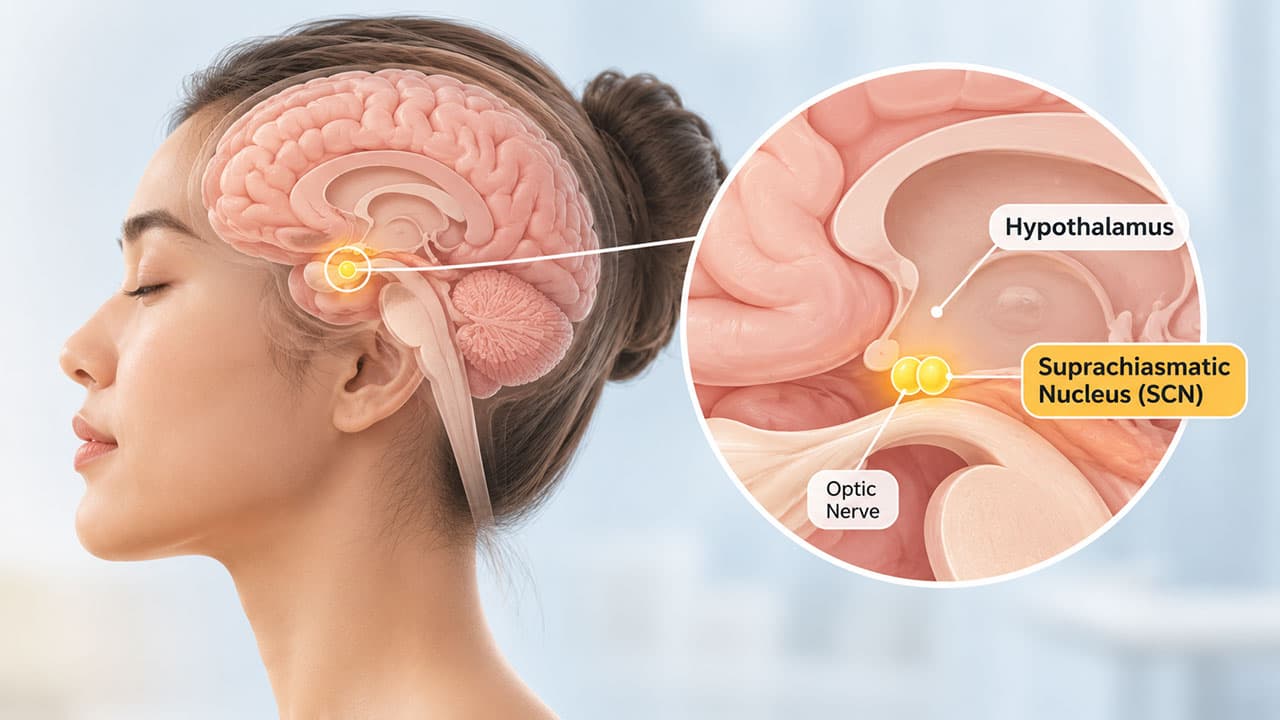
The suprachiasmatic nucleus (SCN) is a small cluster of nerve cells in the hypothalamus of the brain that acts as the "master clock" regulating human circadian rhythms. By capturing light and dark signals from the eyes, the SCN coordinates sleep schedules, melatonin hormone production, body temperature, hunger, and energy metabolism over a 24-hour cycle.
Where Is the SCN Located and How Does It Work?
The SCN is located in the lower part of the brain called the hypothalamus, positioned directly above the crossing of the optic nerves (chiasma opticum). [1]
This strategic position allows the SCN to receive direct reports from the retina of the eye regarding ambient light conditions. As soon as the eyes detect morning light or nighttime darkness, the SCN immediately sends signals throughout the body's organs to adjust their working rhythms. [1]
4 Main Functions of the Suprachiasmatic Nucleus (SCN)
- Regulating the 24-Hour Circadian Rhythm Chronobiology research shows that the SCN acts as the main pacemaker that synchronizes various biological clocks in other organs—such as the liver, heart, and digestive tract—so they operate in harmony with the day-and-night cycle. [3]
- Responding to Environmental Light Signals Light is the strongest regulator of the human biological clock. Morning sunlight signals the SCN that the body should wake up and become active, while darkness at night signals that the body needs to prepare for rest. [4,5]
- Controlling Melatonin Hormone Production As it gets dark, the SCN sends signals to the pineal gland in the brain to produce the hormone melatonin, which triggers natural drowsiness. Conversely, exposure to bright light at night inhibits this signal, suppressing melatonin production and keeping you awake. [6]
- Synchronizing Hormone Patterns, Body Temperature, and Energy Beyond regulating sleepiness, the SCN also coordinates fluctuations in core body temperature, blood pressure, the release of energy hormones in the morning, and the readiness of the digestive system to process food. [1,7]
What Happens If the SCN's Rhythm Is Disrupted?
The timing signals regulated by the SCN can shift or become disrupted due to various daily habits and environmental factors:
- Repeatedly staying up late or drastic changes in sleep schedules.
- Working night shifts or rotating work schedules.
- Long-distance travel across time zones (jet lag).
- Exposure to bright light (especially from phone screens, laptops, or televisions) at night.
- Irregular eating schedules and prolonged stress.
The impacts can include:
- Difficulty sleeping or waking up frequently.
- Daytime drowsiness.
- Decreased focus and concentration.
- Mood swings.
- Irregular hunger and energy patterns.
- Long-term metabolic disorders.
Medical Note: Experiencing sleep or circadian rhythm disorders does not automatically mean your brain tissue or SCN is damaged. In most cases, this occurs because environmental signals and daily lifestyle habits have shifted the timing of your biological clock—and it can be gradually retrained.
7 Ways to Support Your Body's Biological Clock
You can help your SCN stay better synchronized by adopting these simple habits:
- Get natural light in the morning: Open your curtains or spend 15–30 minutes outdoors after waking up.
- Maintain a consistent sleep schedule: Try to go to bed and wake up at roughly the same time every day.
- Reduce screen exposure before bed: Limit the use of phones, laptops, and TVs for at least 30–60 minutes before resting.
- Limit caffeine in the afternoon and evening: Avoid coffee, caffeinated tea, or energy drinks so natural sleep signals are not blocked.
- Regulate your meal times: Avoid large or overly heavy meals right before bedtime.
- Stay physically active: Engage in regular exercise or physical activity in the morning or afternoon.
- Create a sleep-friendly bedroom environment: Make sure your room is dark, cool, and quiet at night.
When Should You Consult a Doctor?
If sleep difficulties persist for several weeks or begin to interfere with daily activities, you should consult a doctor. A medical evaluation is necessary to distinguish circadian rhythm disorders from other conditions such as chronic insomnia, sleep apnea (pauses in breathing during sleep), anxiety disorders, or hormonal imbalances.
Frequently Asked Questions (FAQ)
What is the difference between circadian rhythm and the suprachiasmatic nucleus (SCN)?
The circadian rhythm is the 24-hour biological cycle run by the body (such as sleep schedules, body temperature, and digestion), whereas the suprachiasmatic nucleus (SCN) is the nerve center in the brain that acts as the "conductor" or master regulator of that cycle.
Why can phone screen light at night mess up the biological clock?
Specialized nerve cells in the retina are highly sensitive to the bright light spectrum. When the eyes detect screen light at night, the SCN assumes it is still daytime and holds back the release of melatonin, delaying drowsiness.
Do meal schedules also affect how the SCN works?
Yes. Although light is the primary regulator for the SCN in the brain, the digestive organs and liver also have peripheral biological clocks that are heavily influenced by the regularity of your daily eating schedule.
*Disclaimer: The information in this article is intended for evidence-based health education and does not replace professional medical advice, diagnosis, or treatment from a doctor.
Referensi Jurnal dan Medis
- Das, J. M., & Launico, M. V. (2026). Neuroanatomy, nucleus suprachiasmatic. In StatPearls. StatPearls Publishing. https://www.ncbi.nlm.nih.gov/books/NBK546664/
- Reddy, S., & Sharma, S. (2026). Physiology, circadian rhythm. In StatPearls. StatPearls Publishing. https://www.ncbi.nlm.nih.gov/books/NBK519507/
- Mohawk, J. A., Green, C. B., & Takahashi, J. S. (2012). Central and peripheral circadian clocks in mammals. Annual Review of Neuroscience, 35, 445–462. https://pmc.ncbi.nlm.nih.gov/articles/PMC3710582/
- Slama H, Deliens G, Schmitz R, Peigneux P, Leproult R (2015). Afternoon Nap and Bright Light Exposure Improve Cognitive Flexibility Post Lunch. PLoS ONE 10(5): e0125359. https://doi.org/10.1371/journal.pone.0125359
- Serkh, K., & Forger, D. B. (2014). Optimal schedules of light exposure for rapidly correcting circadian misalignment. PLOS Computational Biology, 10(4), e1003523. https://doi.org/10.1371/journal.pcbi.1003523
- Masters, A., Pandi-Perumal, S. R., Seixas, A., Girardin, J.-L., & McFarlane, S. I. (2014). Melatonin, the hormone of darkness: From sleep promotion to Ebola treatment. Brain Disorders & Therapy, 4(1), 1000151. https://pmc.ncbi.nlm.nih.gov/articles/PMC4334454/
- Refinetti, R. (2020). Circadian rhythmicity of body temperature and metabolism. Temperature, 7(4), 321–362. https://doi.org/10.1080/23328940.2020.1743605