- /
Perbedaan Indeks Glikemik dan Beban Glikemik

Pentingnya pemahaman terhadap konsep Indeks Glikemik (IG) dan Beban Glikemik (BG) tidak hanya berkaitan dengan pengelolaan gula darah, namun juga memiliki dampak yang lebih luas terhadap kesehatan dan keseimbangan tubuh.
Mengatur IG dan BG dalam pola makan tidak hanya berpengaruh pada stabilnya kadar gula darah dan pencegahan lonjakan yang dapat merangsang nafsu makan berlebihan, tetapi juga berperan penting dalam mengendalikan energi serta mencapai berat badan yang sehat. Lebih dari itu, pengendalian IG dan BG memiliki potensi untuk mengurangi risiko penyakit kronis, termasuk diabetes tipe 2, melalui pemeliharaan sensitivitas insulin dan menjaga kadar gula darah tetap seimbang.
Dengan demikian, pemahaman mendalam mengenai IG dan BG memberikan landasan yang kokoh bagi upaya menjalani gaya hidup sehat dan pencegahan penyakit. Apakah keduanya penting? Mari simak ulasannya berikut ini!
Pengertian Indeks Glikemik Dan Beban Glikemik
Indeks Glikemik (IG) dan Beban Glikemik (BG) merupakan konsep penting dalam ilmu nutrisi yang berkaitan dengan bagaimana makanan memengaruhi respons gula darah dalam tubuh. IG mengukur kecepatan kenaikan gula darah setelah mengonsumsi karbohidrat dari suatu makanan. Makanan dengan IG tinggi, seperti makanan olahan atau sereal, dapat memicu lonjakan cepat dalam gula darah, yang diikuti oleh penurunan tajam. Di sisi lain, makanan dengan IG rendah, seperti sayuran dan biji-bijian utuh, merangsang kenaikan gula darah yang lebih lambat dan stabil.
Beban Glikemik, sementara itu, lebih kompleks karena menggabungkan konsep IG dengan ukuran porsi makanan. BG memberikan informasi tentang dampak total suatu hidangan pada gula darah. Misalnya, meskipun makanan memiliki IG rendah, jika dimakan dalam porsi besar, BG-nya tetap bisa tinggi.
Perbedaan Indeks Glikemik Dan Beban Glikemik
Indeks Glikemik (IG) dan Beban Glikemik (BG) memiliki perbedaan dalam konsep dan informasi yang disediakan:
- Konsep Dasar
IG mengukur seberapa cepat karbohidrat dalam makanan meningkatkan gula darah setelah dikonsumsi, dengan perbandingan terhadap glukosa murni.
BG menggabungkan konsep IG dengan ukuran porsi makanan untuk memberikan gambaran lebih menyeluruh tentang dampak total suatu hidangan pada gula darah. - Fokus Informasi
IG memberikan informasi tentang seberapa cepat respons gula darah terjadi setelah mengonsumsi karbohidrat tertentu.
BG memberikan informasi tentang dampak total suatu hidangan pada gula darah, mempertimbangkan baik IG maupun ukuran porsi. - Pentingnya Ukuran Porsi
IG tidak mempertimbangkan ukuran porsi makanan. Makanan dengan IG rendah dapat memiliki dampak gula darah yang lebih rendah, tetapi jika dimakan dalam jumlah besar, efeknya bisa berbeda.
BG mempertimbangkan ukuran porsi, sehingga memberikan pandangan lebih akurat tentang bagaimana makanan sebenarnya akan memengaruhi gula darah dalam konteks konsumsi sehari-hari. - Pemilihan Makanan
IG berguna untuk memilih karbohidrat dengan dampak gula darah yang lebih rendah, yang dapat bermanfaat bagi individu dengan diabetes atau yang ingin menjaga kadar gula darah stabil.
BG membantu memilih makanan dan hidangan secara keseluruhan yang mengontrol respons gula darah secara lebih komprehensif, menghindari lonjakan yang signifikan. - Implikasi Kesehatan
Menggunakan IG dan memilih makanan dengan IG rendah dapat membantu mengelola berat badan dan mengontrol gula darah bagi individu dengan kondisi diabetes.
Menggunakan BG membantu mengontrol respons gula darah lebih efektif melalui kombinasi pengendalian IG dan ukuran porsi, dan berpotensi lebih relevan dalam konteks diet sehari-hari untuk semua orang.
Klasifikasi Indeks Glikemik Dan Beban Glikemik
Klasifikasi Indeks Glikemik (IG)
- Tinggi (70 atau lebih) : Makanan dengan IG tinggi menyebabkan lonjakan cepat dalam gula darah. Contoh: Roti putih, sereal olahan, permen.
- Sedang (56-69) : Makanan dengan IG sedang meningkatkan gula darah dengan kecepatan yang moderat. Contoh: Nasi putih, roti gandum.
- Rendah (55 atau kurang) : Makanan dengan IG rendah menyebabkan kenaikan gula darah yang lebih lambat dan stabil. Contoh: Sayuran, buah-buahan segar, biji-bijian utuh.
Klasifikasi Beban Glikemik (BG)
- Rendah (10 atau kurang) : Makanan dengan BG rendah memberikan dampak minimal pada gula darah. Contoh: Sayuran hijau, biji-bijian utuh.
- Sedang (11-19) : Makanan dengan BG sedang memiliki dampak yang lebih signifikan, tetapi masih terkendali. Contoh: Buah-buahan, roti gandum.
- Tinggi (20 atau lebih) : Makanan dengan BG tinggi dapat menyebabkan lonjakan besar dalam gula darah. Contoh: Makanan olahan, camilan manis.
Contoh Nilai Indeks Glikemik Pada Makanan
Makanan dengan IG Tinggi (70 atau lebih):
- Kentang panggang: sekitar 85
- Beras putih: sekitar 73
- Donat: sekitar 76
Makanan dengan IG Sedang (56-69):
- Nasi merah: sekitar 68
- Roti gandum: sekitar 67
- Pancake: sekitar 59
Makanan dengan IG Rendah (55 atau kurang):
- Brokoli: sekitar 10
- Apel: sekitar 36
- Kacang hitam: sekitar 30
Kesimpulan
Penting untuk memahami kedua konsep IG dan BG, tentang bagaimana mereka saling berinteraksi agar dapat membuat pilihan makanan yang cerdas dan mendukung kesehatan gula darah serta manajemen berat badan. Klasifikasi Indeks Glikemik (IG) dan Beban Glikemik (BG) membantu mengidentifikasi dampak makanan pada gula darah.
Klasifikasi IG dan BG memberikan panduan umum dan bisa bervariasi tergantung pada individu, kombinasi makanan, dan faktor-faktor lain seperti pengolahan makanan dan kandungan serat. Mengetahui klasifikasi ini dapat membantu dalam memilih makanan yang lebih sehat dan mendukung pengelolaan gula darah serta kesehatan secara keseluruhan.
Nilai IG dapat bervariasi tergantung pada berbagai faktor seperti cara memasak, kematangan, dan kombinasi makanan. Pada umumnya, makanan dengan IG rendah lebih baik dalam menjaga kadar gula darah stabil, sementara makanan dengan IG tinggi dapat memicu lonjakan cepat dalam gula darah. Kombinasi makanan yang mengandung serat, protein, dan lemak sehat juga dapat mempengaruhi dampak makanan pada gula darah.
YAVA Sebagai Penyedia Makanan/Camilan Dengan Indeks Glikemik Rendah
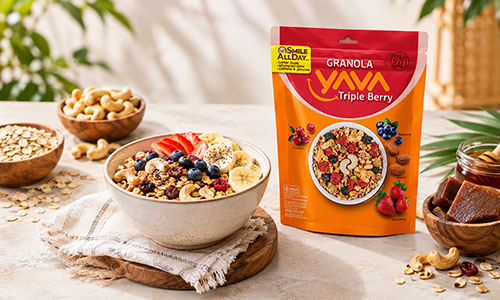
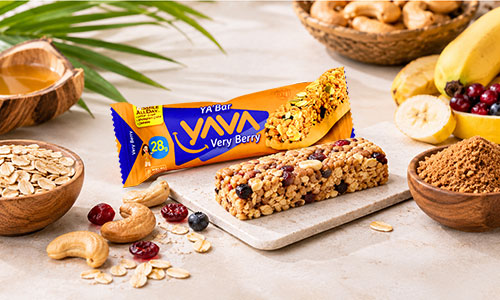
YAVA merupakan pemasok makanan serta makanan ringan yang berfokus pada menyajikan produk dengan Indeks Glikemik yang rendah. Yava menyediakan variasi makanan ringan termasuk granola, kacang mete, popcorn, dan krispi puffs yang dibuat dari bahan-bahan alami yang diperoleh dari berbagai wilayah di Indonesia bagian timur.
Produk-produk ini dirancang untuk menjaga kestabilan kadar gula darah dan memberikan alternatif sehat yang enak. Menggunakan bahan-bahan alami, tanpa gula alkohol atau pemanis buatan, serta bebas dari pengawet dan MSG. YAVA menghadirkan pilihan rasa yang enak dan sehat, sehingga bermanfaat untuk pola makan Anda. Tetap perhatikan informasi nutrisi dan pertimbangkan saran dari tenaga profesional kesehatan sebelum melakukan perubahan besar pada pola makan Anda.
Bingung mencari makanan rendah gula? Temukan produk makanan rendah gula dari YAVA pada toko online kesayangan Anda: