- /
Gula Lontar: Rahasia Aroma dan Rasa Kopi Lebih Kaya
Editor: Danastry Intan
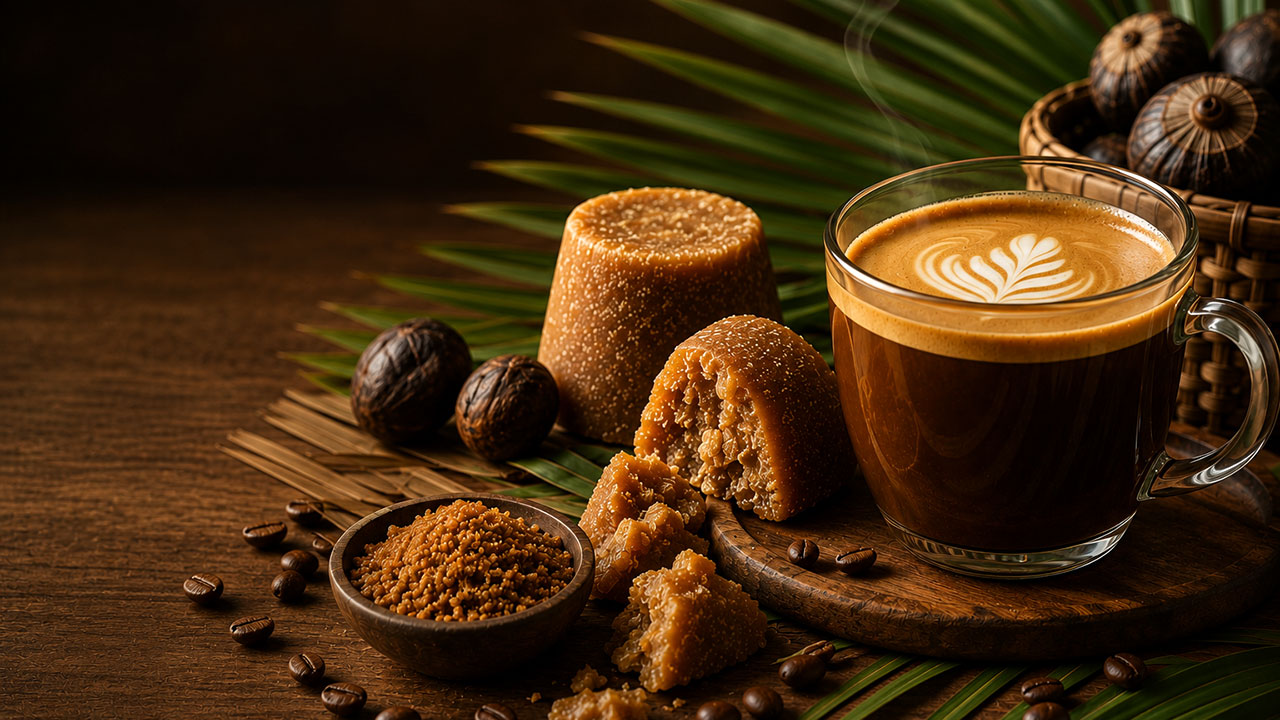
Dalam dunia kopi, tujuan utama penggunaan pemanis bukan sekadar menambah rasa manis, tetapi juga memperkaya pengalaman menikmati kopi. Gula Lontar memiliki profil aroma yang terdiri dari nuansa karamel ringan, roasted, nutty, dan sedikit smoky yang mampu menyatu dengan karakter alami kopi. Berbeda dengan gula aren yang terkadang menjadi dominan dalam cangkir kopi, Gula Lontar lebih berperan sebagai pendukung yang membantu menonjolkan karakter biji kopi itu sendiri.
Dalam beberapa tahun terakhir, pemanis alami menjadi bagian penting dalam budaya minum kopi. Di antara berbagai pilihan yang tersedia, gula aren, susu, coklat, bahkan sirup perasa dengan atificial gula yang menjadi banyaknya pilihan untuk di campur dengan kopi.
Secara ilmiah, Gula Lontar berasal dari nira pohon palma dan mengandung kombinasi sukrosa, glukosa, serta fruktosa yang terbentuk secara alami. Selain memberikan rasa manis, Gula Lontar juga mengandung berbagai senyawa volatil yang berkontribusi terhadap aroma khasnya. Sebuah kajian ilmiah yang dipublikasikan dalam jurnal Heliyon menjelaskan bahwa gula palma mengandung berbagai senyawa aromatik seperti pyrazines, furan derivatives, aldehid, keton, dan senyawa volatil lainnya yang berperan dalam menciptakan aroma manis, nutty, serta karamel alami. (PMC)
Karakteristik inilah yang membuat Gula Lontar memiliki hubungan yang sangat menarik dengan kopi. Kopi sendiri diketahui memiliki lebih dari 800 hingga 1.000 senyawa aroma yang bertanggung jawab terhadap berbagai karakter rasa seperti floral, fruity, chocolate, caramel, hingga nutty. Ketika gula lontar ditambahkan ke dalam kopi, senyawa volatil yang dimilikinya tidak menutupi aroma kopi, melainkan memperkuat persepsi sensori terhadap karakter-karakter tersebut. Penelitian mengenai profil volatil gula palma menunjukkan adanya kandungan pyrazines dan furans yang identik dengan senyawa hasil proses roasting kopi. Kombinasi ini menciptakan efek sinergis yang membuat aroma kopi terasa lebih kaya dan lebih mudah dikenali oleh indera penciuman. (MDPI)
Dari sisi sensori, Gula Lontar juga memiliki keunggulan karena tingkat kemanisannya yang cenderung lebih lembut dibandingkan beberapa jenis gula aren yang memiliki cita rasa karamel pekat. Rasa karamel yang terlalu dominan sering kali menutupi karakter asli biji kopi, terutama pada kopi specialty dengan profil fruity atau floral. Sebaliknya, gula lontar memberikan rasa manis yang lebih bersih sehingga notes alami kopi tetap dapat dinikmati.
Penelitian terbaru mengenai korelasi senyawa volatil dan profil sensorik gula palma menunjukkan bahwa kualitas aroma dan flavor gula palma sangat dipengaruhi oleh kandungan senyawa volatilnya. Studi tersebut menemukan hubungan positif antara komponen volatil dengan atribut aroma, rasa, dan flavor yang dirasakan panelis. Dengan kata lain, semakin kaya kandungan volatil pada gula palma, semakin besar kontribusinya terhadap pengalaman sensorik minuman yang dikonsumsi. (ScienceDirect)
Coffee shop dengan series Gula Lontar akan launching di Semarang STRADA Coffee dengan menciptakan beberapa menu khas Indonesia yaitu Es Kopi Ketan Hitam, Es Kopi Kacang Hijau, Es Kopi Kolak Pisang, dan Es Cendol Espresso akan menjadi series lontar dengan coffee pertama di Indonesia.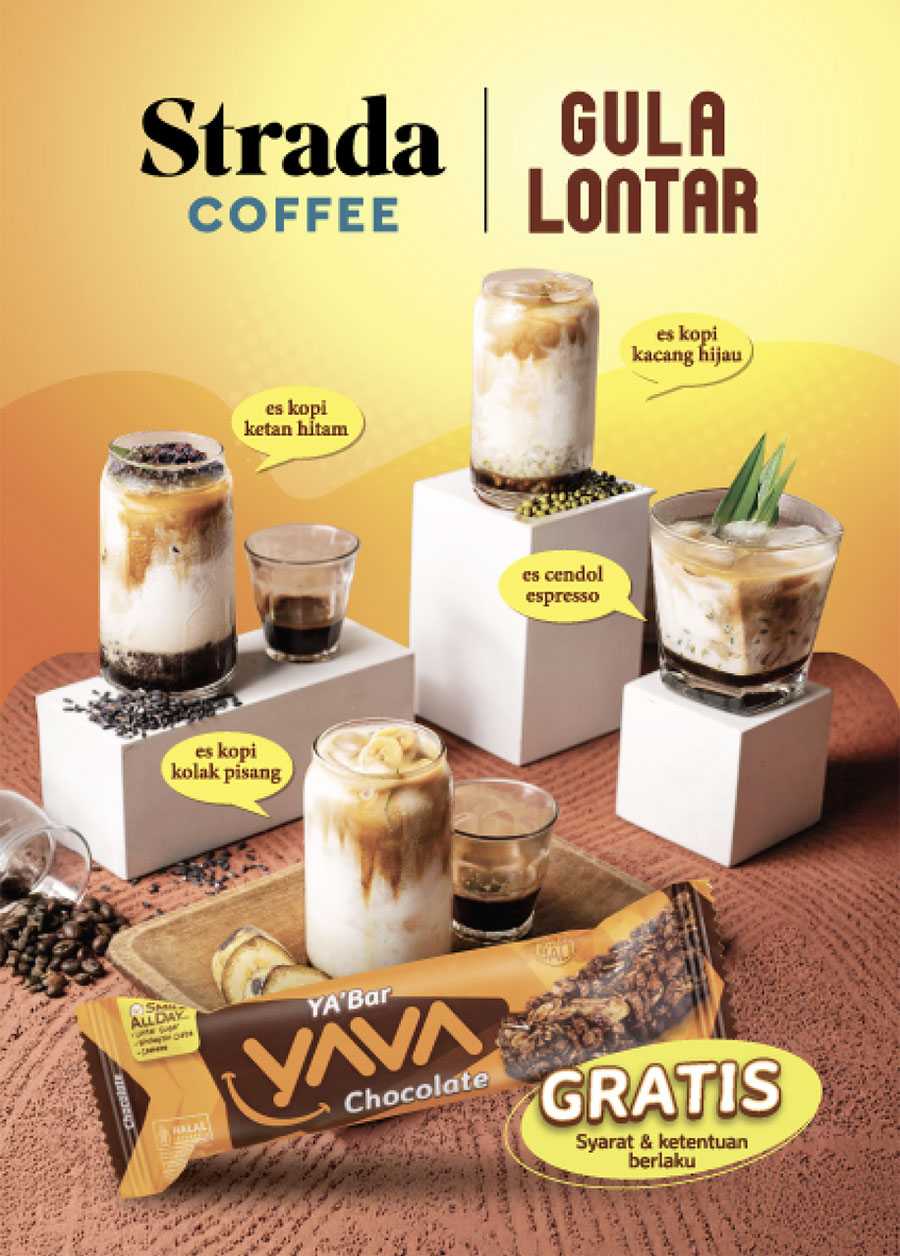 Bagi pecinta kopi yang ingin menikmati keseimbangan antara rasa manis alami dan kompleksitas aroma kopi dengan gula lontar bisa datang ke STRADA Coffee di Kota Semarang. YAVA ingin melihat experience dari customer juga komunitas di STRADA Coffee Semarang dengan Lontar Series, ditambah yang sudah mencoba Gula Lontar akan mendapat YA’Bar hanya dengan google review STRADA Coffee.
Sumber Data Spesifik: